
October 28, 2026
House Cleaning Business Website Design: Build Trust and Bookings
Explore house cleaning website design ideas, booking features, trust signals, and local SEO essentials that help homeowners choose your cleaning service.
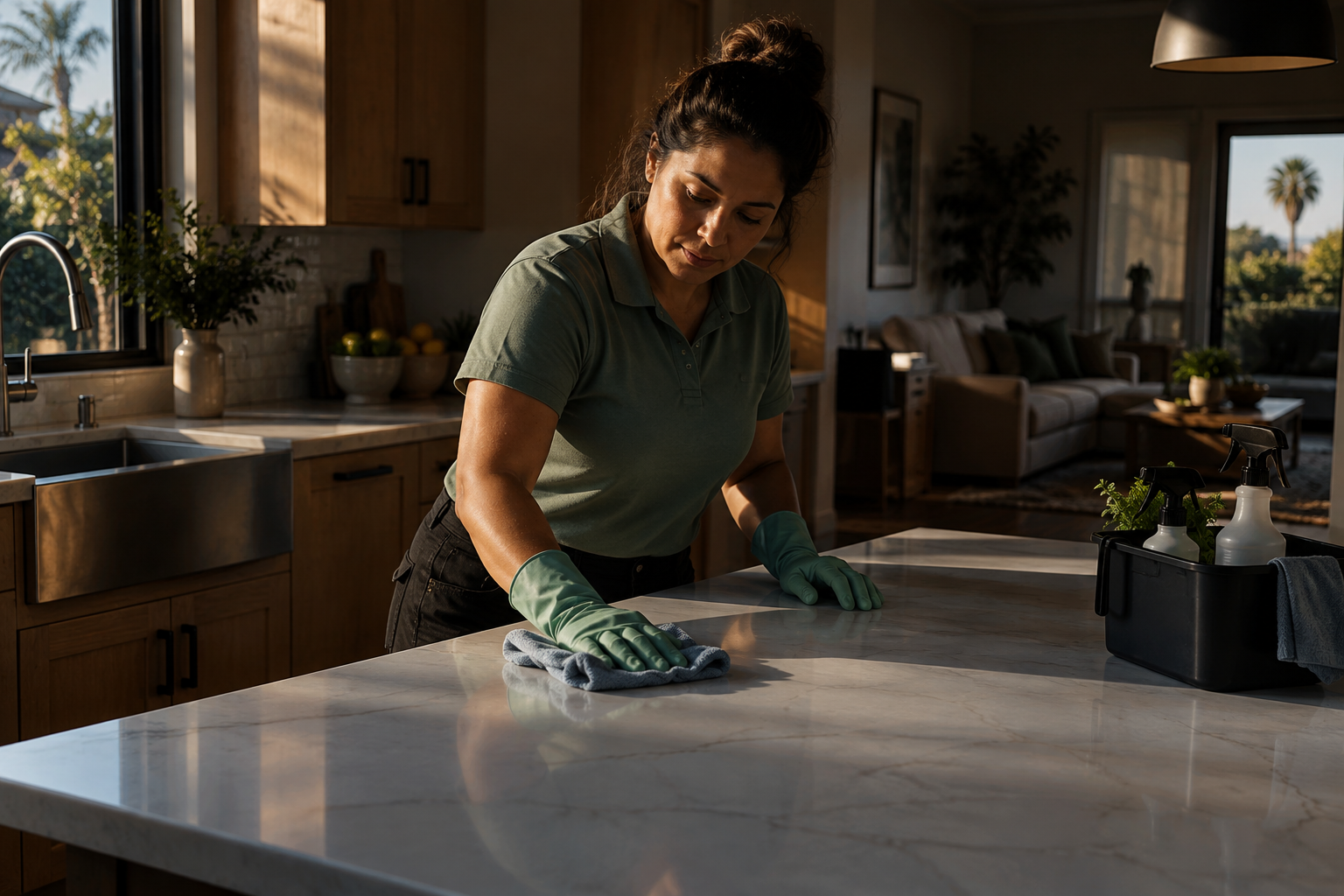
Good house cleaning business website design answers the questions homeowners ask before inviting someone into their space: Can I trust this company? Do they clean homes like mine? What is included, and how do I get started?
The strongest websites make those answers easy to find without burying visitors under sales copy. They combine an approachable visual style with clear service details, credible proof, and a booking process that matches how the business actually operates. Here is how to build that experience for a residential cleaning company.
1. Choose a Design That Fits Your Cleaning Service
There is no single best template for every cleaning business. The right design depends on your services, customers, and scheduling process.
For recurring neighborhood cleaning
Use a welcoming, people-first layout. Lead with an authentic team photo or a professionally photographed home, followed by weekly, biweekly, and monthly service options. Explain whether customers can expect a consistent team, how scheduling works, and what happens when they need to reschedule.
The primary action might be “Get My Cleaning Estimate,” with a secondary link to see what is included.
For premium residential cleaning
A restrained palette, generous spacing, and detailed interior photography can communicate care without making the website feel impersonal. Pair attractive imagery with specific information about surface care, staff training, and service customization—only where those details reflect your actual practices.
Avoid vague claims such as “unmatched luxury.” Explain what makes the service different.
For move-in and move-out cleaning
Prioritize deadlines, empty-home requirements, and the scope of work. Visitors may be coordinating movers, landlords, or property managers, so put availability inquiries and checklist details near the top.
Across all three approaches, a useful homepage sequence is: service and location, primary action, cleaning options, trust signals, process, and final booking invitation.
2. Must-Have House Cleaning Business Website Design Features
A beautiful website still creates friction if customers cannot understand the offer or request service easily.
Clear service pages and checklists
Give standard cleaning, deep cleaning, and move-out cleaning their own pages when they represent distinct services. Explain the differences rather than repeating the same description.
Useful details include:
- Tasks included in each room.
- Optional extras, such as oven or refrigerator interiors.
- Tasks your team does not perform.
- Whether supplies and equipment are provided.
- Preparation requirements before arrival.
- How home condition can affect the estimate.
A simple comparison table can help visitors choose. On mobile, make sure it remains readable without excessive sideways scrolling.
A quote form that asks only what matters
Start with the information needed to assess fit: ZIP code, service type, approximate home size or bedroom and bathroom count, preferred frequency, and contact details.
Do not require a full street address if a ZIP code is enough for the first inquiry. Collect entry codes and other sensitive access information later through an appropriately secured process, not a general contact form.
State what happens after submission. “We will review your request and contact you to confirm details” is clearer than an unexplained submit button.
Honest booking and pricing expectations
Use “Book Now” only if customers can actually reserve an appointment. If staff must review the request, label the action “Request a Cleaning” or “Check Availability.”
Published prices, starting rates, and estimate-based pricing can all work. Explain the factors that affect cost, and distinguish an estimate from a confirmed price. Never let a calendar imply that an unconfirmed time slot is reserved.
3. Use Contemporary Design Ideas With a Purpose
Fresh design should make the website easier to use—not turn a simple booking task into an elaborate presentation.
Warm, residential photography: Show kitchens, bathrooms, living areas, and the people doing the work. Obtain permission before photographing a customer's home, and remove identifying details. Real images help visitors understand the service better than generic sparkles or unrelated stock photos.
Soft neutrals with strong contrast: Warm whites, muted greens, and restrained blue accents can create a calm appearance. Keep body text dark enough to read comfortably, and make primary buttons visibly distinct.
Compact service cards: Let visitors compare recurring cleaning, deep cleaning, and move-out service at a glance. Each card should communicate who the service is for and link to a detailed page.
A mobile action bar: A small, persistent call or estimate button can keep the next step accessible. Test that it does not cover form fields, cookie controls, or important content.
Useful interactive elements: A short service selector can guide visitors toward an appropriate cleaning package. Avoid presenting an automated recommendation as a final quote unless the underlying pricing rules support it.
Keep motion subtle, respect reduced-motion settings, and avoid autoplay video. The design should feel polished even when every animation is turned off.
4. Build Trust and Local Visibility Together
Homeowners are evaluating more than cleaning quality. They are deciding who can enter their home and how reliably the company communicates.
Include an About page that identifies the business and explains its approach. Describe insurance, bonding, background checks, or training only when those statements are accurate. Avoid decorative trust badges that imply credentials you do not hold.
For reviews, use authentic feedback with appropriate permission or an approved review integration. Do not invent testimonials or selectively edit a review in a way that changes its meaning.
Local search foundations should include:
- Accurate business contact information and a clearly defined service area.
- Descriptive page titles and headings for each cleaning service.
- An up-to-date Google Business Profile configured appropriately for the business.
- Internal links connecting services, service areas, and booking pages.
- Relevant structured data that accurately describes the business.
Create city pages only when you can make them genuinely useful. A page for an actual service area can explain coverage boundaries, scheduling considerations, and available services. Swapping city names into otherwise identical pages adds little value.
For a service-area business, do not publish a private home address simply to fill a website footer.
5. Connect the Website to Daily Operations
Before choosing a booking tool, map what happens after someone submits an inquiry. Who reviews it? Where does the information go? How is an appointment confirmed?
Connect forms to your customer management or scheduling system where practical. An automatic acknowledgment can confirm receipt, but it should not promise availability that your team has not checked.
Before launch, test:
- Forms, confirmation messages, and notification delivery.
- Phone links and booking flows on actual mobile devices.
- Keyboard navigation, visible labels, and readable error messages.
- Image loading, page speed, and third-party widgets.
- Basic measurement for quote requests, booking completions, and call clicks.
Review lead quality alongside submission counts. More inquiries are not necessarily better if they come from outside your service area or request services you do not offer.
6. Frequently Asked Questions
Should a cleaning company show prices on its website?
Show prices when they can be explained accurately. If costs vary substantially, outline the pricing factors and offer a straightforward estimate process. Any starting price should include meaningful context about what qualifies.
Is online booking better than a quote request form?
Online booking works well when service scope, pricing, and availability are predictable. A quote request is often better for deep cleans, unusual properties, or jobs requiring a condition assessment. Some businesses benefit from offering both.
Which website pages should come first?
Start with a homepage, core service pages, an About page, service-area information, and a contact or booking page. Add clear policies and privacy information appropriate to how you collect customer data.
Effective house cleaning business website design makes your service easier to understand, trust, and request. Ready to improve yours? Book a free strategy call with four:19 Media in Aliso Viejo, Orange County, at (949) 449-2941 or tony@four19media.com. Discuss your goals and an initial custom website demo in 72 hours—not a promise of a fully launched website.